As America’s population ages, telephone reassurance programs have become a frontline defense against social isolation, medical emergencies, and “unseen” crises among older adults. Yet many sheriff offices, 911 centers, councils on aging, and public-health departments still rely on volunteers or sworn officers to place hundreds of daily calls by hand—a process that strains budgets and delays response time.
U.S. Census Bureau projections show that by 2030, people aged 65 and older will make up 20 percent of the nation’s residents (source). At the same time, staffing shortages in public-safety agencies are at a 10-year high (International Association of Chiefs of Police, 2024). Scaling traditional reassurance programs is quickly becoming unsustainable. The obvious next step is automation.
Why Manual Telephone Reassurance Hits a Wall
| Pain Point | Manual Call Programs | Impact |
|---|---|---|
| Human resources | Officers, dispatchers, or volunteers must dial every number | Schedules erode patrol capacity; volunteer burnout |
| Consistency | Missed calls during peak incident hours | Broken chain of custody if welfare check is missed |
| Documentation | Handwritten logs or spreadsheets | Limited audit trail; reporting gaps |
| Scalability | Add participants → add callers | Program stalls when enrollment grows |
A 2022 survey of 1,800 U.S. municipalities found that 67 percent of agencies paused or capped their senior check-in initiatives because of staffing constraints (National League of Cities). For communities determined to protect vulnerable residents, automation isn’t hype—it’s a lifeline.
Automating Faster: Core Benefits for Public Agencies
-
Immediate outbound capacity
Modern cloud dialers can place thousands of simultaneous calls, ensuring everyone on the roster receives their daily check-in within minutes. -
Real-time notifications
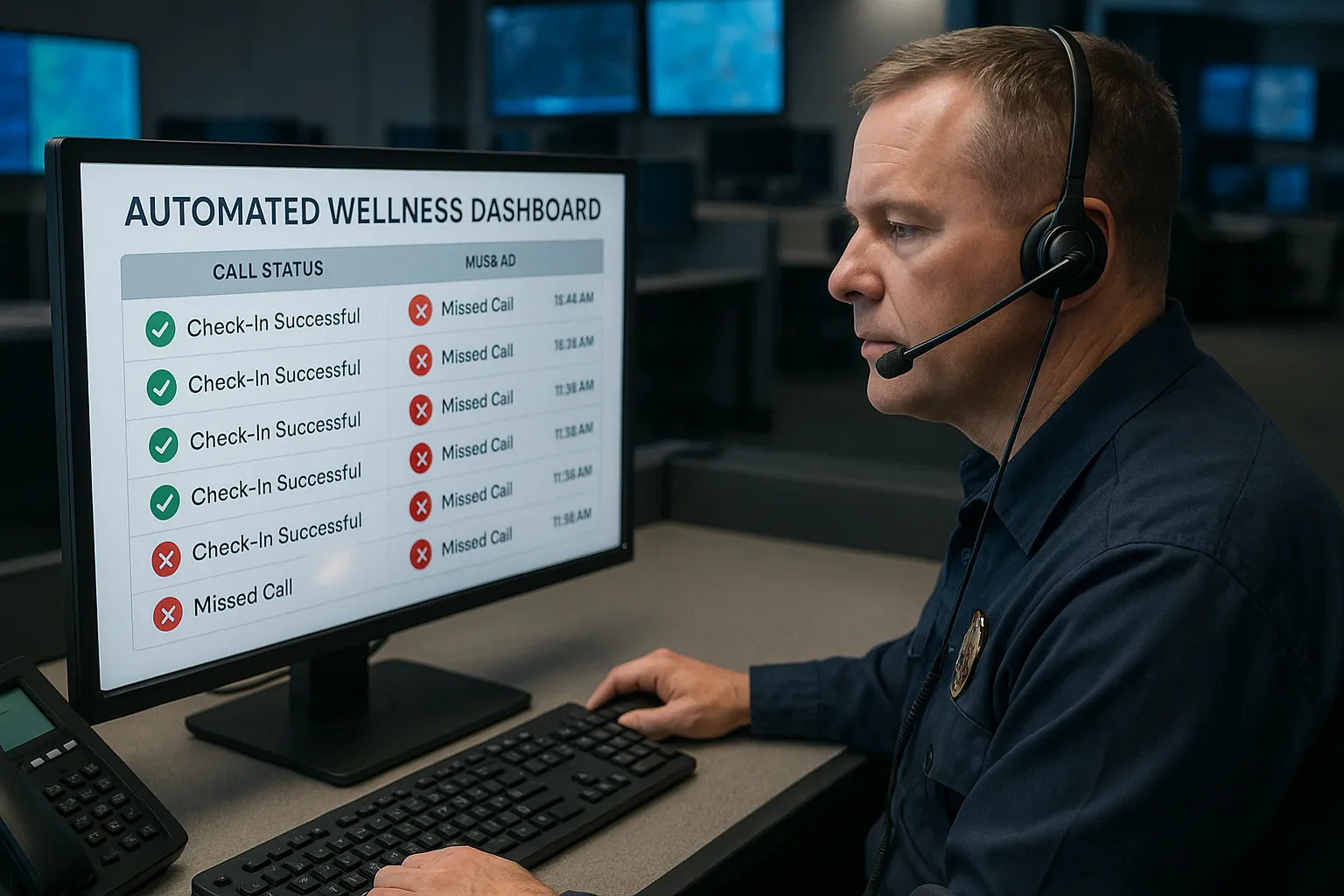
When a senior misses or fails a call, supervisors, caregivers, or on-duty deputies receive SMS/email alerts instantly—no more end-of-shift reconciliations. -
Data-driven decision-making
Digital logs give program managers precise metrics: contact rate, average response time, and escalation frequency. Those insights help justify grants and budget renewals. -
Resource reallocation
Agencies report saving 4–6 staff hours per 100 participants per day by shifting to automated systems (Center for Digital Government white paper, 2024).
Must-Have Features in an Automated Telephone Reassurance Platform
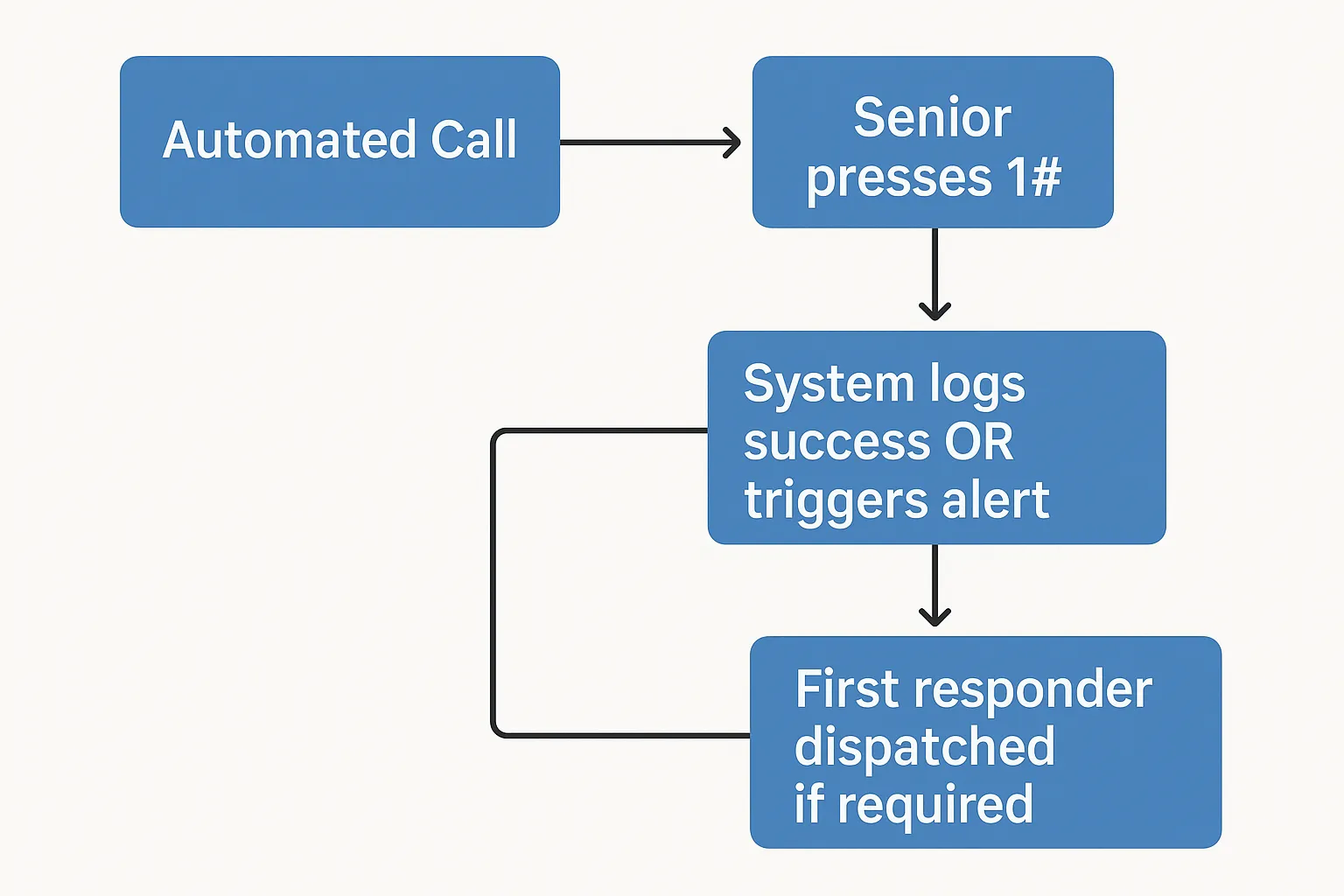
- Automated voice calls that accept a simple keypad confirmation (e.g., press 1 then #).
- Optional SMS replies for participants who prefer texting.
- Customizable schedules (daily, weekends only, post-hospital discharge, etc.).
- Unlimited “care group” contacts so family, neighbors, or case managers can receive notifications alongside first responders.
- Secure, encrypted data storage that meets CJIS and HIPAA guidelines.
- Role-based dashboards with exportable reports for grant compliance.
How ConfirmOk Accelerates Automation
ConfirmOk’s cloud service was designed from the ground up for public safety and social-service workflows:
- Automated daily check-in calls without special hardware. Participants use any landline or cell phone they already own.
- Flexible scheduling lets coordinators choose call windows that match staff availability.
- Care groups with unlimited members keep deputies, family, and home-health aides in sync.
- Instant notifications via voice, SMS, or email the moment a check-in is missed.
- Custom reporting for county councils, state auditors, or federal grant deliverables.
- Secure, encrypted storage hosted in U.S. data centers compliant with industry standards.
Because ConfirmOk is cloud-based, most agencies launch in days—not months. Import a participant CSV, record a friendly greeting, and your automated reassurance program is live.
For configuration support or bulk-upload templates, email [email protected].
Implementation Blueprint: From RFP to Live Calls in 30 Days
- Stakeholder alignment – Brief command staff, IT, and legal on program goals and data-retention needs.
- Data migration – Clean existing participant lists; include primary number, backup number, and escalation contacts.
- Script development – Draft a concise greeting (“This is the Springfield Police wellness call…”) and select keypad response.
- Pilot phase – Enroll 25–50 participants for a two-week beta; review call completion and false-positive rates.
- Staff onboarding – Train dispatchers and outreach coordinators on the web dashboard; set up role-based alerts.
- Full rollout & publicity – Announce the automated service through local media, social workers, and aging networks to boost enrollment.
Agencies following this roadmap routinely hit 95 percent successful check-ins within the first month, according to internal ConfirmOk customer analytics (2025).
Security and Compliance Considerations
- HIPAA & PHI – Although reassurance data is non-clinical, missed-call notes may reference medical conditions. Ensure your vendor signs a Business Associate Agreement (BAA) when required.
- CJIS – Sheriff departments accessing participant addresses through the platform should verify CJIS alignment for audit readiness. ConfirmOk maintains CJIS-compliant encryption at rest and in transit.
- Accessibility – The FCC’s Twenty-First Century Communications and Video Accessibility Act (CVAA) encourages dual-mode notifications (voice + SMS) to serve users with hearing impairments.
Measuring Success After Automation
| Metric | Pre-Automation | Post-Automation Target |
|---|---|---|
| Daily call completion rate | 70–80 % | 95 %+ |
| Average confirmation time | 2–3 minutes | <30 seconds |
| Staff hours per 100 seniors | 6–8 hrs | 1 hr |
| Average escalation response | 15 minutes | <5 minutes |
Regularly export platform reports to share wins with city councils, county commissioners, and grant committees.
Conclusion
Telephone reassurance programs save lives, but manual dialing cannot keep pace with the demographic surge of older adults or ongoing staffing shortages in public safety. Automating calls, alerts, and reporting transforms a high-touch obligation into a low-overhead, data-rich service that scales effortlessly.
ConfirmOk empowers law enforcement, councils on aging, and 911 centers to modernize their telephone reassurance programs for seniors—without new hardware, complex IT projects, or long contracts.
Have questions about migrating your existing RUOK list or integrating with CAD? Contact [email protected] for personalized guidance.
Ready to experience the difference automation makes? Visit ConfirmOk.com today and start your free trial.